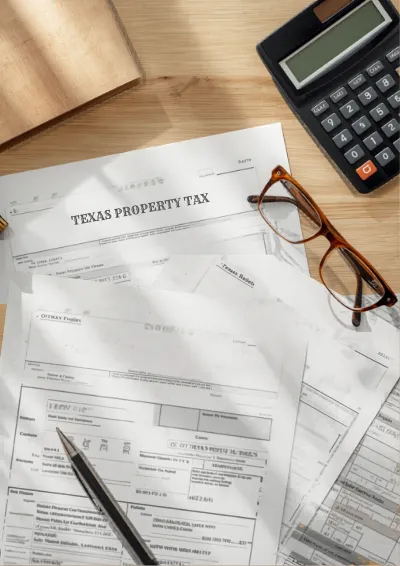
Bee Cave vs Lakeway Property Taxes: The Hidden Cost Gap That Costs Homeowners $5,000 a Year
Most Bee Cave vs Lakeway comparisons talk about lifestyle. The schools, the lake access, the commute, the vibe. This one talks about money. Specifically, the property tax and cost-of-ownership gap that can quietly cost homeowners $5,000 to $9,000 more per year depending on which community they choose.
If you are comparing these two communities as a buyer in 2026, the tax structure is one of the most important factors in your decision and one of the least discussed. Here is the full breakdown.
Why Property Taxes Matter More in Texas Than Most Buyers Expect
Texas has no state income tax. That is legitimately great news and one of the main reasons buyers relocate from California, New York, and other high-income-tax states.
What Texas does have is some of the highest property tax rates in the United States. And unlike California, which has Proposition 13 to cap annual increases for established owners, Texas property taxes are reassessed annually by county appraisal districts and can increase meaningfully year over year (capped at 10% per year for homestead properties but starting from whatever the county assesses your purchase at).
Your annual property tax bill in the Austin area is the sum of several individual tax rates: the city rate, the county rate, the school district rate, and any applicable municipal utility district (MUD) or public improvement district (PID) rates. The combination of all these layers is your effective rate.
The difference between Bee Cave and Lakeway is primarily in two components: the city rate and the MUD district structure.
The City Tax Rate: Where Bee Cave Has a Major Advantage
Bee Cave has maintained a city property tax rate of $0.02 per $100 of assessed value. That is not a typo. Two cents per $100.
It is the lowest municipal property tax rate in Texas and one of the lowest in the United States. On a $1,000,000 home, the city portion of your Bee Cave property tax bill is $200 per year.
Lakeway's city tax rate is approximately $0.17 per $100 of assessed value. On that same $1,000,000 home, the city portion of your Lakeway property tax bill is $1,700 per year.
That single component creates a $1,500 annual gap between the two cities on a $1,000,000 home. Over 10 years of ownership, that difference is $15,000.
Both cities are served primarily by Lake Travis ISD, which carries a tax rate of approximately $0.99 to $1.07 per $100 depending on the year. Travis County adds approximately $0.35 per $100. Those components are roughly equivalent between the two communities for most properties.
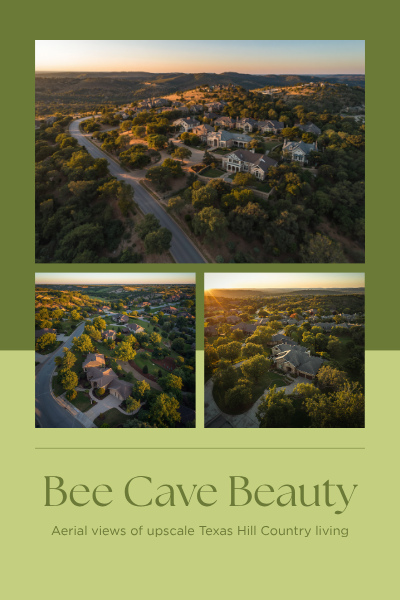
The MUD District Factor: Where It Gets Complicated
Many communities in both Bee Cave and Lakeway were developed under Municipal Utility District financing structures. MUD districts are special taxing entities that finance infrastructure (water, wastewater, roads, drainage) through bonds repaid by property taxes levied on the homes in the district.
MUD district rates in the Bee Cave and Lakeway area range from roughly $0.10 to $0.45 per $100 of assessed value depending on the specific district and how much of its bond debt has been retired.
The critical point for buyers: MUD district rates are property-specific and not always clearly disclosed in online listings. Two homes on adjacent streets can have meaningfully different effective tax rates if one is in an active MUD district and one is not.
Before making an offer on any home in Bee Cave or Lakeway, your agent should identify the specific MUD district (if any) that applies to that property and what the current rate is. This is a standard part of due diligence in Texas and is disclosed in the property tax records.
Some of the more established neighborhoods in Bee Cave, particularly in areas that have been developed for 15 to 20 years, have retired most of their MUD bond debt and carry lower MUD rates. Newer developments often carry higher MUD rates that will decline over time as the bonds are paid down.
Side-by-Side Comparison: $800,000 Home
Here is what the annual property tax bill looks like on a representative $800,000 home in each community, using 2026 approximate rates:
Component: City Rate
Bee Cave: $0.02 per $100 = $160
Lakeway: $0.17 per $100 = $1,360
Annual Difference: $1,200 in favor of Bee Cave
Component: School District (Lake Travis ISD)
Bee Cave: ~$1.04 per $100 = $8,320
Lakeway: ~$1.04 per $100 = $8,320
Annual Difference: Equal
Component: County (Travis)
Bee Cave: ~$0.35 per $100 = $2,800
Lakeway: ~$0.35 per $100 = $2,800
Annual Difference: Equal
Component: MUD District (varies significantly)
Bee Cave range: $0 to $2,400 depending on district
Lakeway range: $0 to $3,600 depending on district
Annual Difference: Potentially $0 to $2,000+ in favor of Bee Cave
Component: Total Effective Rate Estimate
Bee Cave: Approximately 1.7% to 2.0%
Lakeway: Approximately 1.9% to 2.3%
Annual Difference on $800K home: $1,600 to $2,400 in favor of Bee Cave
On a $1,000,000 home, that difference scales to $2,000 to $3,000 per year. When you include MUD district variations, the real-world gap for many buyers is $3,000 to $5,000 annually.
Over a 10-year ownership period, the cumulative tax advantage of Bee Cave over Lakeway on a $1,000,000 home ranges from $30,000 to $50,000. That is meaningful money that disappears from your household if you choose Lakeway without factoring in the tax structure.

HOA Fees: The Other Cost Variable
Both communities have homeowners associations, but the structure and cost vary significantly.
In Bee Cave, HOA fees depend heavily on which community you are in. The Hill Country communities and gated neighborhoods like Provence carry HOA fees ranging from approximately $600 to $2,400 per year. Some of these fees cover amenity maintenance that genuinely adds lifestyle value.
In Lakeway, sub-communities like Rough Hollow carry HOA fees ranging from approximately $1,200 to $3,600 per year depending on the specific neighborhood tier, and these fees cover the marina, pools, fitness center, and trail systems. If you buy in Rough Hollow and use the amenities, these fees have real value. If you buy there for the prestige and rarely use the amenities, they are a recurring cost with limited personal benefit.
Buyers comparing the two communities should calculate HOA fees alongside property taxes to get a true picture of ongoing ownership cost.
Insurance: Roughly Equal
Homeowners insurance rates in Bee Cave and Lakeway are broadly similar. Texas insurance rates have increased meaningfully across the state in recent years due to storm events and increased reinsurance costs. Budget approximately $3,500 to $6,000 per year for homeowners insurance on a $1,000,000 home, varying by age of home, construction type, proximity to flood zones, and coverage levels.
Neither community has a meaningful systematic advantage over the other on insurance.
The Bottom Line: What the Numbers Actually Mean
On a like-for-like basis, buying in Bee Cave rather than Lakeway saves most buyers between $2,000 and $5,000 per year in property taxes, with some scenarios showing even larger gaps depending on specific MUD district rates.
Over a 10-year ownership period at a $1,000,000 price point, that is $20,000 to $50,000 in cumulative savings. Over 20 years, it compounds further.
The meaningful caveat: median home prices in Bee Cave are higher than in Lakeway. You are paying for that tax advantage in the purchase price. Bee Cave's 2026 median sits around $1.09 million. Lakeway's sits around $777,000. If budget requires you to be in the $700,000 to $850,000 range, Lakeway likely has a larger selection of homes at that price point even accounting for the higher ongoing costs.
The right community depends on your specific situation, your budget, the specific home and its MUD district status, and how you weigh purchase price against ongoing tax cost. This comparison gives you the framework to run the real numbers.
Frequently Asked Questions: Bee Cave vs Lakeway Property Taxes
Q: Does Bee Cave really have the lowest city tax rate in Texas?
A: Yes. Bee Cave's city property tax rate of $0.02 per $100 of assessed value is the lowest municipal tax rate in Texas. It is a meaningful financial advantage for homeowners compared to virtually every other incorporated Texas city.
Q: What is the total effective property tax rate in Bee Cave TX in 2026?
A: The total effective rate in Bee Cave varies by specific location and MUD district but typically runs approximately 1.7% to 2.0% of assessed value annually. On a $1,000,000 home, budget roughly $17,000 to $20,000 per year in property taxes.
Q: What is the total effective property tax rate in Lakeway TX in 2026?
A: Lakeway's effective rate typically runs approximately 1.9% to 2.3% of assessed value annually. On a $1,000,000 home, budget roughly $19,000 to $23,000 per year in property taxes.
Q: Are MUD district fees the same as property taxes?
A: MUD district charges are collected through your property tax bill and function the same way as other property tax components. They are not a separate payment but are included in your total annual property tax assessment.
Q: What school district serves Bee Cave and Lakeway?
A: Both communities are served primarily by Lake Travis ISD, ranked among the top three school districts in the Austin metro. A small portion of western Bee Cave falls within Eanes ISD, which is ranked number one in Austin. The school district for any specific property determines a significant portion of your property tax rate and should always be verified before purchase.
Q: Is Bee Cave or Lakeway a better investment in 2026?
A: Both communities have strong long-term fundamentals tied to Lake Travis ISD, Hill Country lifestyle, and proximity to Austin's economy. Bee Cave's lower ongoing tax cost improves your net return over time. Lakeway's current buyer's market conditions and lower entry prices create an opportunity for buyers who can navigate the negotiation environment in 2026.